This blog covers the psychosocial risks that FIFO, mining, construction and remote-workforce organisations need to understand. Topics include fatigue and sleep disruption, isolation and roster pressure, financial stress, relationship strain, camp culture, behavioural change recognition, and the gap between having support available and workers actually using it early.
The content is written for WHS managers, HSE advisors, people and culture leaders, site managers and operations leaders who are responsible for managing psychosocial risk in high-hazard, remote and rotating-roster environments. It is practical and business-facing, not generic wellness messaging.
Under the model Work Health and Safety Act, a person conducting a business or undertaking has a duty to manage psychosocial hazards at work. That obligation extends to remote and isolated work environments, including FIFO operations. Awareness matters — but awareness alone is not a risk control.
Recent articles cover:
- “Call EAP” Is a Start. What Happens Next on Your FIFO Site? — A worker speaks up.
- Beyond "R U OK?" — What Real Psychosocial Support Looks Like on a FIFO Site — One awareness day doesn't carry a worker through a two-week swing.
- FIFO Mind Connect & ISO 45003 Alignment — ISO 45003 alignment should not stop at policies and risk registers.
New articles are published regularly. If you are evaluating psychosocial risk programs for your workforce, the About page explains how FIFO Mind Connect fits into existing safety systems, or send an enquiry to discuss your organisation's needs.

“Call EAP” Is a Start. What Happens Next on Your FIFO Site?
A worker speaks up. The supervisor gives them the EAP number. What happens to the workplace issue they raised? A practical look at the response gap on FIFO sites.
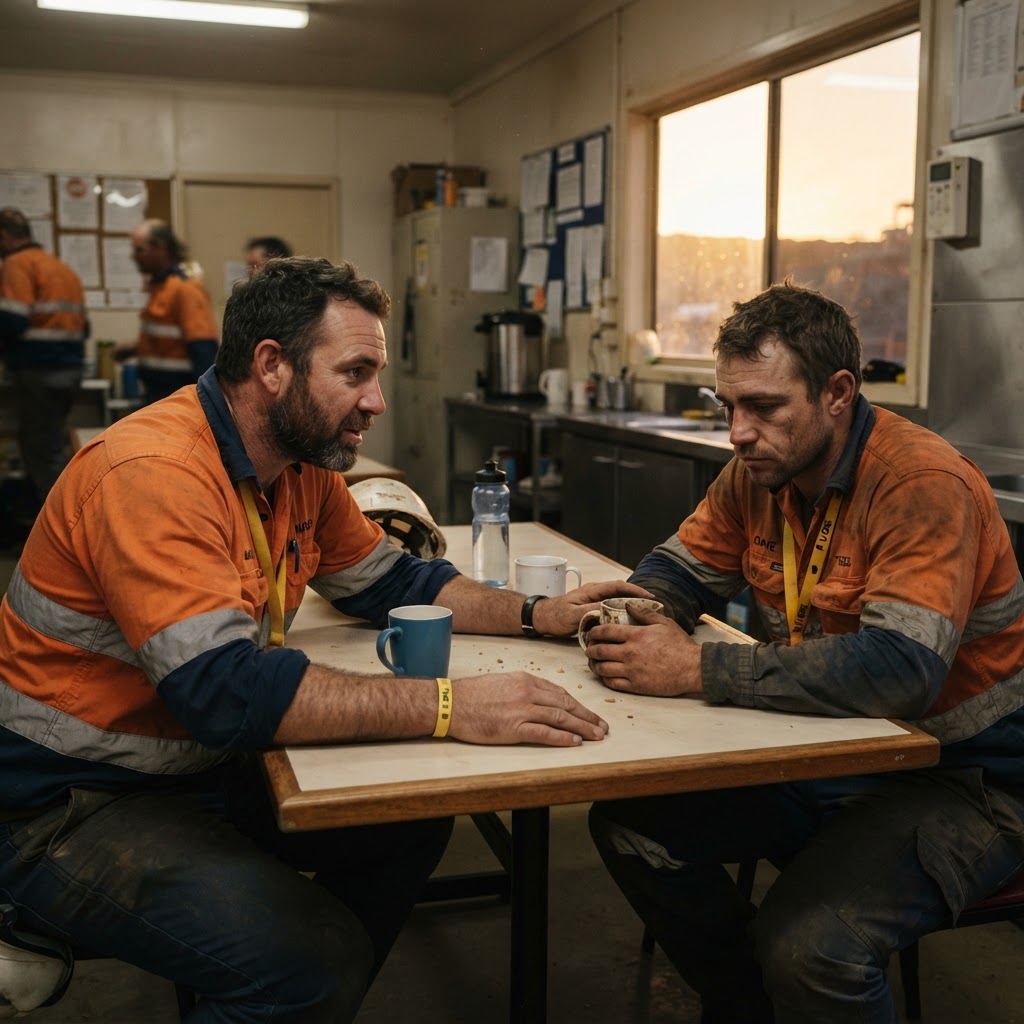
Beyond "R U OK?" — What Real Psychosocial Support Looks Like on a FIFO Site
One awareness day doesn't carry a worker through a two-week swing. Genuine psychosocial support in FIFO work shows up in everyday habits: crib room conversations that go deeper than "she'll be right", a whole workforce trained to notice changes in each other early, and mates who know how to ask twice. Here's what practical, ongoing support looks like on remote sites — and why it matters long after R U OK Day ends.

FIFO Mind Connect & ISO 45003 Alignment
ISO 45003 alignment should not stop at policies and risk registers. See how FIFO Mind Connect helps translate psychosocial risk principles into practical frontline awareness for FIFO and remote workforces.

Good at the Job Doesn’t Always Mean Ready for FIFO
A worker can be technically capable, experienced and reliable and still be unprepared for the realities of remote work. FIFO readiness asks a different set of questions.

Psychosocial Risk Training Is a Starting Point — Not the Whole Control System
Psychosocial risk training helps remote workers recognise hazards and respond early, but it must connect with consultation, reporting, operational controls and HSE systems.

Management Churn Is a Risk Signal in Remote Operations
Management churn in remote operations is not always a recruitment issue. It can be a risk signal linked to pressure, unclear authority, fatigue, site culture and psychosocial risk.

Financial Stress in Remote Workers: A Psychosocial Risk Hiding in Plain Sight
Financial pressure does not stay at home when FIFO workers fly to site. Interest rate rises, mortgage stress, household costs and debt pressure can affect how workers sleep, focus, communicate and cope during a swing. For FIFO and remote workforces, financial stress can amplify existing psychosocial hazards such as isolation, fatigue, roster pressure, relationship strain and reduced access to support.

Psychosocial Risk Is No Longer a Wellbeing Issue, It Is a WHS Liability
Psychological injury claims are rising, regulators are watching, and employers can no longer treat psychosocial risk as a soft wellbeing issue. Here is why workforce-level psychosocial risk awareness matters.

Psychosocial Risk in FIFO Work: What Employers Need to Understand
FIFO work creates unique psychosocial risks including isolation, fatigue, roster pressure, relationship strain and reduced access to support. Here is what employers, HSE teams and site leaders need to understand.